Did you know that managing your money effectively can be as simple as dividing it into three basic divisions? The popular 50/30/20 rule, popularized by U.S. Sen. Elizabeth Warren, suggests allocating your after-tax income into needs, wants, and savings/debt repayment.
You can take control of your financial situation in just one hour by applying this modernized approach. By dedicating 20% of your income to savings and debt repayment, you’ll be on your way to securing your financial future.
By following this straightforward money management plan, you’ll be able to understand where your money is going and make conscious financial decisions. This efficient system is ideal for busy professionals looking for a simple yet effective way to manage their finances.
What Is the 50/30/20 Budget Rule?
The 50/30/20 rule is a straightforward framework for allocating your after-tax income across three essential categories: needs, wants, and savings.
The Core Principle Explained
The core principle of the 50/30/20 budget rule is simple: allocate 50% of your after-tax income towards necessities or ‘needs‘, 30% towards discretionary spending or ‘wants‘, and 20% towards savings and debt repayment.
This allocation helps strike a balance between financial responsibility and quality of life. For instance, your ‘needs‘ include housing, utilities, and groceries, while ‘wants‘ might include dining out or entertainment.
Origins and Evolution of the 50/30/20 Method
The 50/30/20 budget rule was popularized by U.S. Senator Elizabeth Warren and her daughter Amelia Warren Tyagi in their 2005 book “All Your Worth: The Ultimate Lifetime Money Plan.”
Since its introduction, the method has evolved to accommodate changing economic conditions and modern financial challenges, making it a versatile tool for managing your expenses and achieving financial stability.
| Category | Percentage | Examples |
|---|---|---|
| Needs | 50% | Housing, Utilities, Groceries |
| Wants | 30% | Dining Out, Entertainment, Hobbies |
| Savings & Debt Repayment | 20% | Emergency Fund, Retirement Savings, Debt Repayment |
Why the 50/30/20 Budget Works for Busy People
In today’s fast-paced world, the 50/30/20 budget stands out as a practical approach to money management. This straightforward framework allows you to manage your money effectively without getting bogged down in complex financial calculations.
Simplicity as Its Greatest Strength
The 50/30/20 budget is easy to comprehend and apply, making it ideal for busy professionals. By dividing your income into three clear categories, you can ensure that your necessary expenses are covered, you have room for discretionary spending, and you’re actively saving for the future.
This simplicity reduces the mental load of budgeting, allowing you to make financial decisions quickly and confidently.
Flexibility for Modern Lifestyles
The 50/30/20 budget is not a one-size-fits-all solution; it’s adaptable to various life situations and financial goals. Whether you’re dealing with irregular income, unexpected expenses, or changing financial priorities, this framework can be adjusted to suit your needs.
By providing a clear structure for allocating your income, it helps you stay on track with your financial plan, even when time is scarce. This flexibility makes it an effective way to manage your finances in the long term.
Before You Start: Calculate Your After-Tax Income
Before diving into the 50/30/20 budget, it’s crucial to determine your after-tax income. This figure is the foundation upon which your budget allocations will be made.
Understanding Your Take-Home Pay
Your take-home pay, or net income, is the amount you receive after taxes have been deducted from your paycheck. If you have a regular paycheck, this is typically the amount you see. For those with irregular income, such as freelancers, you’ll need to calculate your average monthly income after taxes.
Adjusting for Retirement Contributions and Health Insurance
When calculating your after-tax income, consider adding back any pre-tax deductions like 401(k) contributions or health insurance premiums. These amounts are part of your income but aren’t included in your take-home pay.
Adjusting for these deductions gives you a more accurate picture of your income for budgeting purposes. For example, if you contribute $500 monthly to a 401(k), add this back to your take-home pay to understand your total monthly income.
The 50% Needs Category: Essential Expenses
Understanding your “needs” is the first step in applying the 50/30/20 budget rule effectively. Your needs are the essential expenses that you cannot avoid, and they should not exceed 50% of your after-tax income.
What Qualifies as a Need
Needs are expenses that are necessary for your survival and basic functioning in society. These include:
- Rent or mortgage payments
- Groceries
- Utilities
- Transportation costs, such as car payments or public transit fees
- Insurance, including health, auto, and home insurance
- Minimum debt payments on loans and credit cards
It’s essential to distinguish between true needs and “upgraded needs” that are actually wants. For example, while you need a car for transportation, a luxury car might be a want rather than a need.
Common Mistakes When Categorizing Needs
One common mistake is to confuse needs with wants due to lifestyle inflation. As your income increases, you might be tempted to upgrade your lifestyle by spending more on things like housing, cars, and other luxuries. However, these should still be considered wants if they exceed the basic necessity.
To avoid this, objectively evaluate your expenses and ask yourself if they are truly necessary. If your needs exceed 50% of your after-tax income, consider downsizing or finding more cost-effective options, such as refinancing loans or switching to more affordable insurance plans.
By keeping your needs at or below 50%, you create financial resilience and flexibility in your budget, allowing you to allocate resources more effectively towards savings and debt repayment.
The 30% Wants Category: Quality of Life Expenses
The 30% “wants” category in the 50/30/20 budget rule is where you get to enjoy the fruits of your labor, making life more enjoyable and entertaining. This allocation is for expenses that aren’t essential but enhance your quality of life.
Defining Your Wants Realistically
Wants are expenses that go beyond the basics, allowing you to enjoy life to the fullest. They include:
- Entertainment, such as dining out, movies, or hobbies
- Travel and vacations
- Premium subscriptions, like streaming services or gym memberships
- Upgraded versions of essential items, such as a premium smartphone
Distinguishing between needs and wants is crucial. For instance, a basic phone service is a need, while a premium smartphone with unlimited data is a want.
Balancing Enjoyment and Financial Responsibility
Balancing your wants with financial responsibility is key. It’s about making conscious choices on how to use your discretionary income. Prioritize your wants based on personal values and the satisfaction they provide, rather than social pressure or impulse.
To reduce want-based spending without feeling deprived, consider finding free or low-cost alternatives to expensive hobbies or activities. This way, you can enjoy life while maintaining a sustainable financial plan.
By allocating 30% of your budget to wants, you’re acknowledging the importance of enjoyment and quality of life in your financial plan. This balance allows you to enjoy your money while still being responsible with your spending.
The 20% Savings and Debt Repayment Category
Allocating 20% of your net income to savings and debt repayment is crucial for building financial security. This category is fundamental in creating a safety net and achieving long-term financial goals.
Emergency Fund Priorities
Establishing an emergency fund should be your first savings goal. Aim to save three to six months’ worth of essential expenses in a readily accessible savings account, such as a high-yield savings account. This fund acts as a financial safety net in case of unexpected events, such as job loss or medical emergencies.
- Determine your monthly essential expenses.
- Set a target amount for your emergency fund.
- Build your fund incrementally through automatic transfers.
Debt Repayment Strategies
After establishing your emergency fund, focus on debt repayment. Consider using the avalanche method, which involves paying off debts with the highest interest rates first, or the snowball method, where you eliminate smaller debts first to build momentum.
Key debt repayment strategies include:
- Prioritizing high-interest debts.
- Making payments beyond the minimum.
- Balancing debt repayment with other savings goals.
By consistently allocating 20% of your income to savings and debt repayment, you’ll build long-term financial security and create wealth through compound growth.
One-Hour Setup: Step-by-Step Implementation
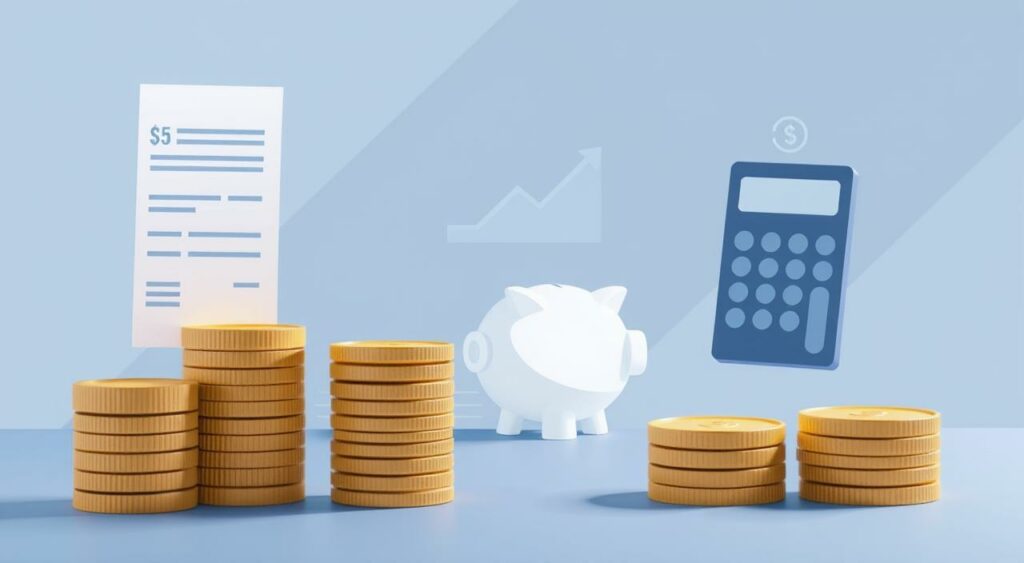
With a clear plan, you can establish a 50/30/20 budget in just one hour, taking control of your finances. This section will guide you through a timed implementation plan to set up your budget efficiently.
Gathering Your Financial Information
To start, spend the first 15 minutes gathering essential financial information. Collect recent bank statements, credit card statements, pay stubs, and recurring bill information. Having these documents readily available will streamline the process. If you don’t have physical copies, quickly access digital versions to save time.
Categorizing Your Expenses
For the next 15 minutes (minutes 16-30), categorize your expenses into needs, wants, and savings/debt repayment. Use a simple categorization system to make quick decisions about borderline expenses. For instance, housing costs are typically considered needs, while dining out is usually a want.
Setting Up Automatic Transfers
From minutes 31 to 45, set up automatic transfers to ensure consistent savings and bill payments. Create separate accounts for different purposes, such as savings and expenses, and establish automatic transfers that align with your pay periods. This step guarantees that your savings will increase steadily without requiring manual labor.
Creating a Tracking System
For the final 15 minutes (minutes 46-60), establish a simple tracking system to monitor your budget adherence. Utilize user-friendly apps and tools that make ongoing budget maintenance minimal. Some popular options include budgeting apps that sync with your accounts and provide real-time updates.
| Time | Task | Description |
|---|---|---|
| 1-15 minutes | Gather Financial Information | Collect bank statements, credit card statements, pay stubs, and bill information. |
| 16-30 minutes | Categorize Expenses | Sort expenses into needs, wants, and savings/debt repayment. |
| 31-45 minutes | Set Up Automatic Transfers | Create separate accounts and set up automatic transfers. |
| 46-60 minutes | Create a Tracking System | Choose a budgeting app or tool to monitor your budget. |
By following this one-hour setup plan, you’ll be well on your way to managing your finances effectively using the 50/30/20 budget rule. Remember to track your expenses for a month or two to better understand your spending habits and make adjustments as needed.
Modern Tools to Automate Your 50/30/20 Budget
The 50/30/20 budget rule can be efficiently managed with the help of modern budgeting apps and digital banking features. By leveraging these tools, you can simplify your financial management and stay on track with your savings goals.
Budgeting Apps That Support the 50/30/20 Method
Several budgeting apps can help you implement the 50/30/20 rule. Look for apps that offer features like automatic categorization, spending analysis, and customizable category percentages. For instance, Mint and YNAB (You Need a Budget) are popular options that can help you track your expenses and stay within your budget.
Digital Banking Features That Simplify Budgeting
Digital banking features can also complement your 50/30/20 budget. Features such as automatic transfers, sub-accounts, and spending notifications can help you maintain your budget with minimal effort. Many banks offer round-up savings and automatic bill pay features that can be integrated into your budgeting strategy.
By combining budgeting apps with digital banking features, you can create a comprehensive system for managing your finances. This integrated approach will help you stay on top of your expenses, savings, and debt repayment, making it easier to achieve your financial goals.
Adapting the 50/30/20 Budget for Different Income Situations
For individuals with irregular income or high expenses, modifying the 50/30/20 budget is crucial for financial stability. The key is to remain flexible and adapt the rule to your specific financial situation.
For Variable or Freelance Income
If your income changes month to month, such as with freelance work or seasonal jobs, you can still apply the 50/30/20 rule by using a flexible approach. Calculate your average monthly income based on the past three to six months and use that number to set your budget. In higher-income months, set aside the extra in a separate savings buffer to cover shortfalls during slower periods. Always fund essential needs first, then allocate to savings accounts and then wants.
For Lower Income or High Cost-of-Living Areas
In lower income situations or high cost-of-living areas, the 50% allocation for needs may be insufficient. Consider modifying the split to 60/20/20 or 70/20/10 while working toward the ideal 50/30/20 through income growth or cost reduction. Practical strategies for reducing essential costs include house sharing, transportation alternatives, or food optimization. By making these adjustments, you can maintain financial stability even with a lower income or higher expenses.
Conclusion: Maintaining Your Budget Beyond the First Hour
With the 50/30/20 budget, you can transform your financial stress into confidence. This simple yet effective budgeting framework helps you manage your after-tax income by allocating 50% towards necessary expenses, 30% towards discretionary spending, and 20% towards savings and debt repayment.
To maintain your budget beyond the initial setup, it’s crucial to review and adjust your financial plan regularly. Schedule a monthly review to assess your budget’s performance and make necessary adjustments as your income, expenses, or financial goals change.
By consistently applying the 50/30/20 rule, you’ll make progress towards your financial goals, such as building an emergency fund, paying off debt, and securing your retirement. Celebrate your financial milestones along the way to stay motivated and focused on your long-term objectives.
FAQ
What is the 50/30/20 budget rule, and how does it work?
The 50/30/20 budget rule is a simple way to allocate your income towards necessary expenses, discretionary spending, and savings. You allocate 50% of your after-tax income towards necessary expenses like rent, utilities, and groceries, 30% towards discretionary spending, and 20% towards saving and debt repayment.
How do I calculate my after-tax income for the 50/30/20 budget?
To calculate your after-tax income, start with your gross income and subtract federal, state, and local taxes, as well as any retirement contributions and health insurance premiums. You can use your take-home pay from your pay stub or calculate it manually using tax software or consulting a financial advisor.
What expenses qualify as “needs” in the 50/30/20 budget?
Necessary expenses, or “needs,” include essential costs like rent or mortgage, utilities, groceries, transportation, and minimum payments on debts. These expenses are necessary for maintaining a basic standard of living.
How can I prioritize debt repayment within the 20% savings and debt repayment category?
To prioritize debt repayment, focus on high-interest debts first, such as credit card balances. Consider consolidating debts into a lower-interest loan or balance transfer credit card. You can also use the snowball method, paying off smaller debts first to build momentum.
Can I adjust the 50/30/20 proportions if I have a variable income or high cost of living?
Yes, you can adjust the proportions based on your individual circumstances. If you have a variable income, consider allocating a larger percentage towards savings during months when you earn more. In high cost-of-living areas, you may need to adjust the proportions to accommodate higher necessary expenses.
What are some recommended budgeting apps that support the 50/30/20 method?
Some popular budgeting apps that support the 50/30/20 method include Mint, You Need a Budget (YNAB), and Personal Capital. These apps allow you to track your income and expenses, set budget categories, and automate savings and debt repayment.
How can I automate my 50/30/20 budget to make it easier to stick to?
To automate your 50/30/20 budget, set up automatic transfers from your checking account to your savings and investment accounts. You can also use digital banking features like automatic bill pay and savings goals to simplify your budgeting process.